
Amanita Muscaria | The Mushroom Many Fear
Do not eat or process mushrooms you don’t know the name of, or don’t know what it is.

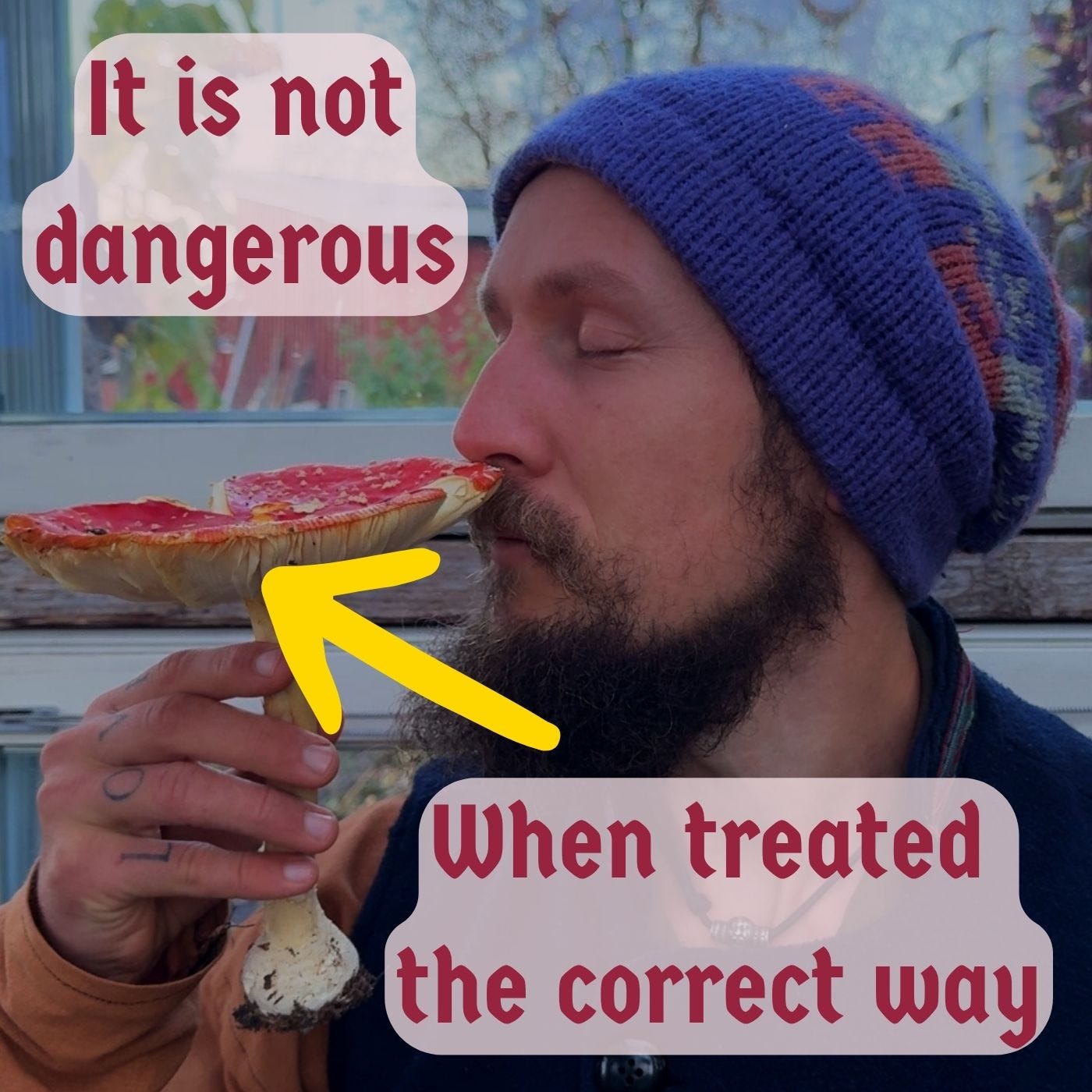
Do not eat or process mushrooms you don't know the name of, or don't know what it is. This is the first important reminder. The second is to move into the fear, because on the other end lies your fullest expression.
I start this video off by sharing my understanding of the three biggest components in the Amanita, which are Muscimol, Ibotenic Acid and Muscarine. All three have different effects on the body, and by knowing what they do we can reduce the risk of toxicity.
Muscimol is the sleep/calm component which targets the GABA-A receptors in the brain, creating the sleepy effect.
Ibotenic Acid is the stress component which "stresses" the neurons in the brain and creates a "go" signal for activation. Which, with a big enough dosage, can overstimulate the neurons and in the end damage or destroy them.
Muscarine is the sweat component which turns on the body's water system and can cause nausea, sweating and slow down the heart rate. Luckily for us, the Amanita only contains traces of muscarine. So it is very low.
I further delve into the process of decarboxylation through boiling and drying the Amanita. Which in short adds heat to the mushroom to chemically turn the Ibotenic Acid into Muscimol.
Important information: Boiling the Amanita for 2 - 2.5 hours with acid like lemon juice is widely practiced, and much of the Ibotenic Acid will either transform to Muscimol or leach into the water (which can then be discarded). Exactly how much transforms is not established by the study (mentioned below). When drying, the rate of transformation is lower.
It is all about risk reduction, and not risk removal. The amount of toxins like the Ibotenic Acid and Muscarine also varies from mushroom to mushroom, the local climate and the region you live in. No two mushrooms are the same.
This study went into how the toxins in the Amanita were reduced by drying and boiling it. I have also used this study for the numbers I have mentioned in the video: TSUNODA ET AL. 1993: "Change in Ibotenic Acid and Muscimol Contents in Amanita muscaria during Drying, Storing or Cooking"
Here is the link: https://www.jstage.jst.go.jp/article/shokueishi1960/34/2/34_2_153/_article
Discussion about this episode